
There are mistakes I see again and again as a piano teacher. It is easy for me to point out and correct mistakes as a face to face piano teacher but with learning online these mistakes can go unchecked. It isn’t careless playing, and it isn’t a lack of effort. More often than not, it’s something the player simply doesn’t realise they’re doing.
Wrong notes creep in without intention. A phrase loses its shape. Dynamics are technically there on the page but somehow don’t make it into the sound. Fingering choices settle that feel secure in the moment, yet limit what the hand can do later. None of this happens deliberately. It happens because, when you’re practising on your own, there’s no one there to interrupt the process and say, “Just stop there a second.”
That’s why, in my piano course, I don’t just show how to put a piece together. I use my experience to think ahead about the kinds of mistakes that are likely to appear once a student is practising alone, and I address those before they have time to settle.
A practical example: Twilight
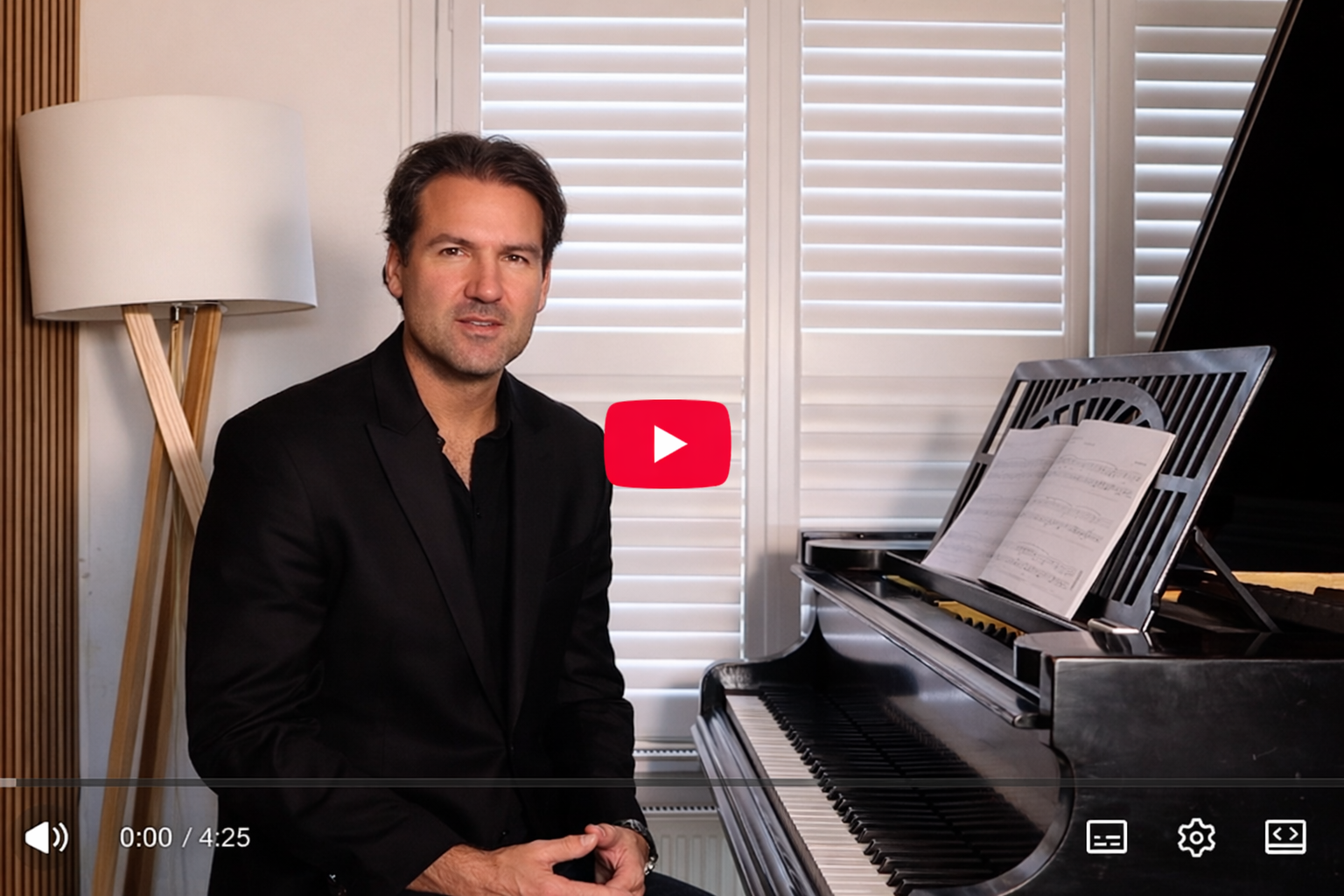
In the video I go through my piece, Twilight. One of the most common issues appears at the start of each phrase. Because the melody begins with a repeated note as do most of the phrases, many players play the first note too detached without realising. If you were singing the phrase, you wouldn’t separate those notes. You’d play them as part of the same breath. That difference in sound is easy to miss when you’re practising on your own.
Musically it breaks the flow of the melody line, can create accents even when masked with the sustain pedal. Here I am also pre-empting that you may go on to make this mistake in other pieces where it will be more obvious, and so I try to nip these issues in the bud so that my students have real musical understanding.
In Twilight, the shape of the phrase depends on small, continuous movements of the hand and wrist/arm as the line rises and falls. When those adjustments don’t happen, the hand tends to stay fixed and the fingers do all the work. The sound becomes flatter and the phrasing loses its natural direction.
When coordination takes over listening
Wrong notes can also appear without the player understanding why or even noticing at all. This often happens when attention is taken up with simply getting both hands to line up. Coordination becomes the priority, and listening takes a back seat. When that happens, small position changes or interval shifts can go unnoticed, not because the player can’t read the music, but because their attention is divided.
What makes this particularly tricky is that the practice still feels productive. The piece holds together, the notes are mostly there, and nothing seems obviously wrong but habits begin to form that are harder to undo later.
Why Knowing What Not to Do Matters
This is where I’ve found it’s just as important to be clear about what not to do as it is to demonstrate what to do. Simply showing a correct version isn’t always enough, especially when someone is practising alone.
Knowing the common danger points changes how a student practises. It gives them something specific to listen and watch for, rather than assuming that repeating the passage will eventually solve the problem.
Over time, that awareness makes practice more efficient and more musical. Instead of reinforcing habits that later need undoing.
Why I built the course this way
All of this is the reason I designed my course the way I did. Learning piano online can work extremely well, but only if there is supervision, anticipation, and the opportunity to check what’s really happening when you practise on your own.
Alongside the video lessons, there is exam supervision and structured practice guidance, so progress isn’t left to guesswork. There are live online teaching sessions where students play to each other and learn by listening, not just by watching. Students can send me videos of their playing, ask questions by email, and get direct feedback rather than automated responses.
The course is supported by full access to the video tutorials and of course the Hey Presto Piano Method book.
Author
